Mathematical argument
against the validity of
the Voigt transformations of 1887.

[ part 1 of 2 ]


This will involve looking at 4 cases that will consider a comparison of points in two frames.

CASE 1
X' = X
CASE 2
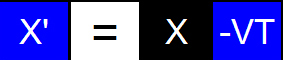
X' = X - VT
CASE 3
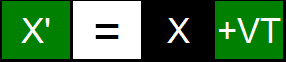
X' = X + VT
CASE 4
X' = X - VT


CASE 1


If a point is in a frame, then it must also exist in a coincident frame.


CASE 2

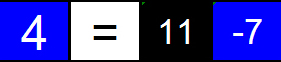
point    from frame    into frame
transformed mathematically, correctly, to the left by


Since the frame was moved to the left, the point at 11,0 as well, transforms to the left... passing through 10, then 9, 8, 7, 6, 5 and stopping at 4,0. Notice that the transformed TO point in the original frame is at    in the new frame.


CASE 3

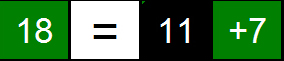
point   from frame   into frame
transformed mathematically, correctly, to the
right by   


Since the frame was moved to the right, the point at 11,0 as well, transforms to the right... passing through 12, then 13, 14, 15, 16, 17 and stopping at 18,0. Notice that the transformed TO point in the original frame is at 11,0 in the new frame.


If a point at X,0 in a frame is transformed to a new frame, then the new point must also be at X,0 in its' new frame, in order to be a mathematically valid coordinate point transformation.

incorrect Voigt transformation
Short historical examination of the use of versions this equation...X' = X - XT